

Introduction
In many modern societies, time is understood as a straight line—past behind us, future ahead, and the present as a fleeting point between the two. Ancient African thought, and Kemetic philosophy in particular, approached time very differently.
Time was not a line to be conquered.
It was a cycle to be maintained.
To understand African metaphysics, one must understand how Africans conceived duration, repetition, renewal, and eternity.
1. Time as Rhythm, Not Countdown
In Kemet, time was inseparable from natural rhythms:
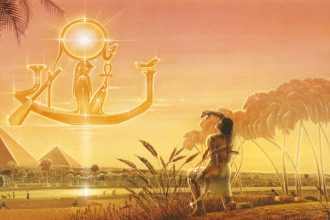
- The daily movement of the sun
- The seasonal flooding of the Nile
- Agricultural cycles of planting and harvest
- Birth, death, and regeneration
Time was experienced as recurrence, not as a race toward an endpoint. What mattered was not speed, but alignment with the proper moment.
To act “out of time” was to act against order.
2. Cyclical Time and Cosmic Order
Kemetic cosmology understood the universe as a system that must be continually renewed.
Each cycle—day, year, dynasty, life—risked falling into disorder if Ma’at was not upheld. Time therefore demanded responsibility:
- Rituals renewed cosmic balance
- Ethics stabilized social continuity
- Memory protected against chaos
The passage of time was not neutral. It carried moral weight.
3. Eternity as Continuity
Ancient Egyptian thought distinguished between different modes of eternity:
- Eternity as repetition
- Eternity as lasting presence
Eternity was not escape from time, but successful participation in it. A person achieved continuity by living in alignment with Ma’at, thus remaining present across generations through memory, influence, and ancestral existence.
Immortality was ethical before it was spiritual.
4. The Role of Ancestors
Ancestors were not relics of the past. They were active participants in the present.
African societies understood that:
- The dead do not vanish
- Memory sustains identity
- The living carry the unfinished responsibilities of those before them
Time therefore flowed through people, not past them. To forget one’s ancestors was to break the cycle and invite imbalance.
5. Kingship and Cyclical Renewal
In Kemet, kingship itself was cyclical.
A Pharaoh did not rule forever; he occupied a function within a cycle. Each reign was expected to:
- Restore order
- Renew Ma’at
- Prepare continuity
When rulers failed, it was understood as a disruption of time’s proper rhythm—not merely a political error.
Power existed to protect continuity, not to dominate history.
6. African Time vs Modern Time
Modern time is often:
- Quantified
- Fragmented
- Detached from ethics
African time was:
- Qualitative
- Integrated
- Morally structured
This difference explains many modern misunderstandings of African societies, which are wrongly judged as “slow” or “backward” by standards that confuse speed with meaning.
African thought values timeliness, not haste.
7. Why Cyclical Time Matters Today
Many contemporary crises stem from a broken relationship with time:
- Environmental destruction
- Obsession with growth
- Disconnection from ancestors
- Loss of long-term responsibility
Cyclical time reminds us that:
- Actions return
- Imbalance accumulates
- Continuity must be maintained
For HOTEP.AFRICA, time is not nostalgia.
It is structure.
Conclusion
African philosophy teaches that time is not something we own or control. It is something we enter correctly.
Cycles must be respected. Memory must be preserved. Eternity is not found beyond the world, but within a life lived in balance.
To live outside the rhythm of time is chaos.
To live within it is continuity.
Hotep.