
Introduction
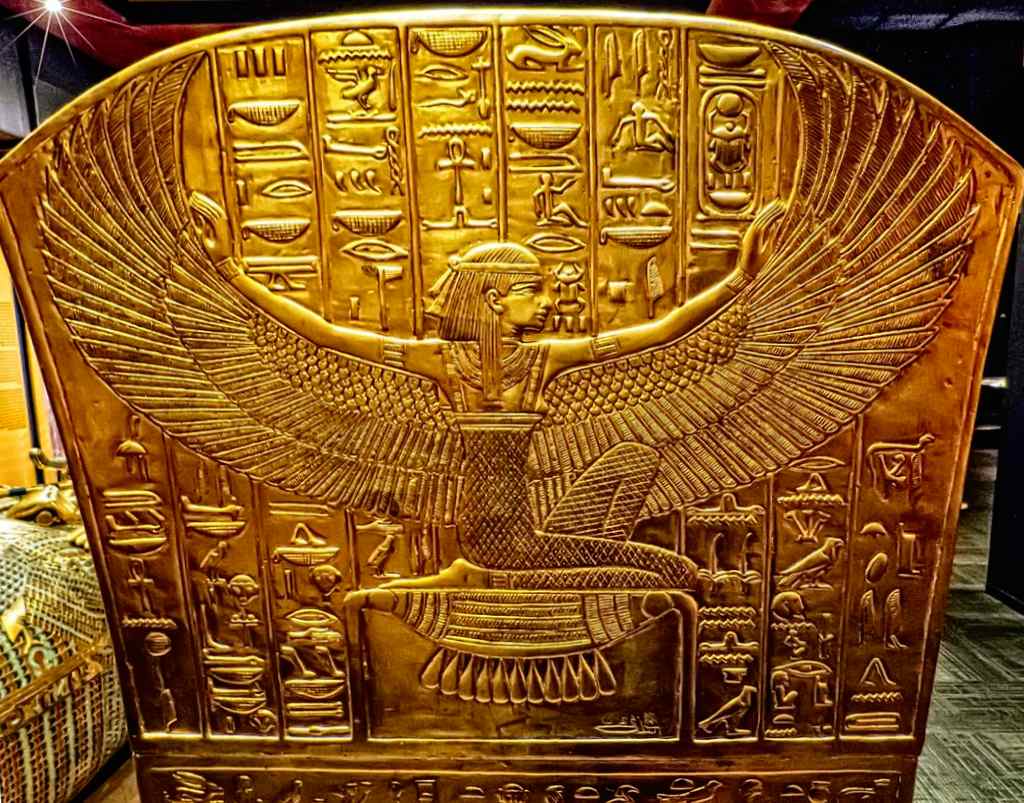
Among all the concepts inherited from Ancient Egypt, Ma’at is the most fundamental and the most misunderstood. Often reduced to a goddess or translated simply as “justice” or “truth,” Ma’at is in fact the organizing principle of Kemetic civilization—at once moral, social, cosmic, and spiritual.
Ma’at is not a belief.
It is a law of alignment.
To understand Kemet, one must understand Ma’at.
1. What Is Ma’at?
Ma’at is the principle that ensures order in the universe. It governs:
- The movement of the stars
- The rhythm of the Nile
- The legitimacy of political power
- The moral conduct of individuals
In Kemetic thought, the universe does not function randomly. It operates according to balance, proportion, and harmony. Ma’at is the name given to this equilibrium.
Chaos, disorder, excess, and injustice were grouped under the opposing concept of Isfet. Civilization existed to maintain Ma’at and restrain Isfet.
2. Ma’at Is Not Religion — It Is Structure
Unlike many later religious systems, Ma’at is not based on blind obedience or fear of punishment. It is a rational and ethical framework.
Ma’at structured:
- Law and justice
- Governance and leadership
- Education and social conduct
- Spiritual responsibility
A society was considered “civilized” only if it lived in accordance with Ma’at. Rituals, prayers, and temples had meaning only if they reflected ethical behavior in daily life.
There was no separation between morality and reality.
3. Ma’at and the Role of the Pharaoh
The Pharaoh was not divine in the modern sense of absolute power. He was the guarantor of Ma’at on Earth.
His legitimacy depended on:
- His ability to govern justly
- His respect for cosmic order
- His responsibility toward the people
When Ma’at was upheld, the land prospered. When it was violated, famine, unrest, and collapse followed. Political failure was therefore understood as a moral failure, not merely a technical one.
Power without Ma’at was illegitimate.
4. Ma’at in Daily Life
Ma’at was not reserved for priests or rulers. Every individual was expected to live Ma’at through:
- Truthfulness
- Moderation
- Respect for others
- Self-discipline
- Responsibility for one’s actions
This ethical consciousness is most clearly expressed in Kemetic moral texts, such as the Declarations of Innocence, where the deceased affirms what they did not do—not as confession, but as evidence of a life lived in balance.
Ethics preceded salvation.
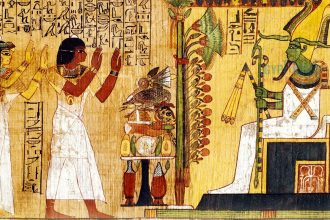
5. The Weighing of the Heart
One of the most powerful symbols of Ma’at is the Weighing of the Heart.
After death, the heart of the deceased was weighed against the feather of Ma’at. The heart represented:
- Conscience
- Memory
- Moral truth
A heart heavy with imbalance could not proceed. The judgment was not imposed externally; it was the consequence of one’s own life.
In this vision, salvation is not granted—it is earned through alignment.
6. Ma’at as African Philosophy
Ma’at is not an isolated Egyptian idea. Across Africa, similar principles appear:
- Balance over excess
- Community over ego
- Ethics over accumulation
- Harmony with nature
This confirms that Ma’at belongs to a broader African philosophical tradition, not to a single culture in isolation.
African philosophy does not begin with abstract speculation. It begins with how life must be lived correctly.
7. Why Ma’at Matters Today
Ma’at is not a relic. It is a lens through which modern crises can be understood:
- Political corruption
- Social imbalance
- Environmental destruction
- Spiritual emptiness
These are not merely technical problems. They are signs of misalignment.
Reintroducing Ma’at does not mean returning to the past. It means restoring:
- Ethics to power
- Meaning to progress
- Balance to knowledge
For HOTEP.AFRICA, Ma’at is not symbolism.
It is method.
Conclusion
Ma’at is the silent architecture of Kemet.
It is the principle that made civilization possible without domination, spirituality meaningful without fear, and knowledge powerful without arrogance.
To live Ma’at is not to imitate Ancient Egypt.
It is to align truth, action, and responsibility—in any time, in any place.
Hotep.