
Introduction
Ancient Egyptian spirituality is often presented as a self-contained system—unique, isolated, and detached from the rest of the African continent. This perception is misleading. Egyptian spirituality did not emerge in a vacuum; it developed within a continuous African cultural, spiritual, and philosophical environment.
To understand Kemet correctly, one must look south, inward, and across Africa, not away from it.
1. Africa as a Spiritual Continuum
Across Africa, spiritual systems share core assumptions:
- The universe is ordered, not random
- Life is animated by a vital force
- The visible and invisible worlds are interconnected
- Ancestors remain active within the community
These principles appear clearly in Kemet and across African societies, from the Nile Valley to West, Central, and Southern Africa. Differences in expression do not negate unity of spiritual logic.
Egyptian spirituality belongs to this continuum.
2. The Nile Corridor and Cultural Flow
The Nile was not a boundary—it was a spiritual and cultural artery.
For millennia, populations moved along the river, carrying:
- Religious ideas
- Ritual practices
- Symbols and cosmological concepts
- Political and social structures
Nubia, Kush, and Upper Egypt formed a shared sacred landscape, where deities, myths, and ritual forms circulated and evolved. Egyptian religion absorbed, refined, and systematized ideas that were already African in origin.
3. The Concept of Vital Force
A foundational element of African spirituality is the belief in a life-sustaining force that animates all beings.
In Kemet, this appears through concepts such as:
- Spiritual essence
- Breath of life
- Power of speech and intention
Across Africa, similar ideas govern healing practices, rituals, and ethical conduct. Life is not static matter—it is energy in motion, requiring balance and respect.
This shared metaphysical intuition links Egyptian spirituality to broader African cosmology.
4. Ancestors and Continuity
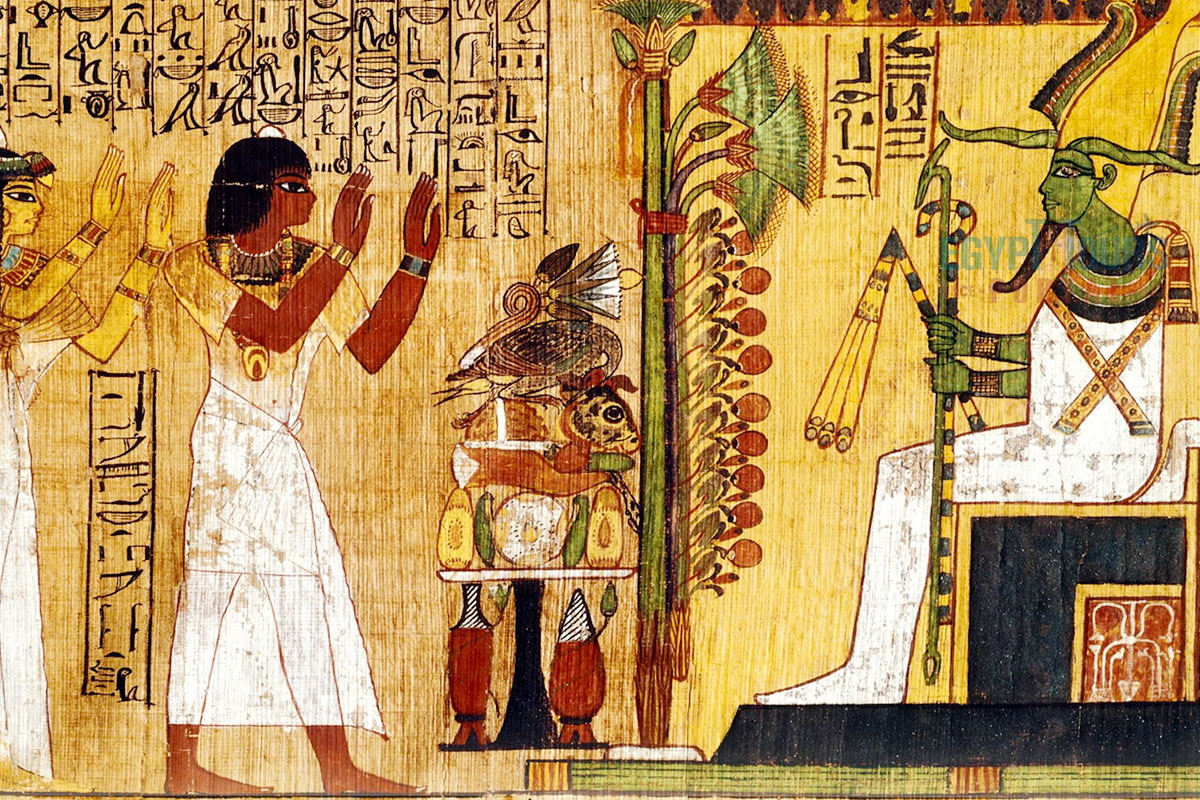
In Kemetic belief, the dead did not disappear. They transitioned into another mode of existence while remaining connected to the living.
This mirrors African ancestral traditions where:
- Ancestors guide and protect
- Memory sustains identity
- Death does not break community
The elaborate Egyptian funerary system was not an obsession with death, but an affirmation of continuity. The goal was preservation of harmony across generations, not escape from the world.
5. Sacred Kingship Across Africa
The concept of sacred kingship in Egypt finds strong parallels throughout Africa.
Common features include:
- The ruler as mediator between worlds
- Authority grounded in moral responsibility
- Leadership accountable to cosmic order
Egyptian Pharaohs were not isolated examples. They belonged to a wider African tradition where power was meaningful only when aligned with spiritual law.
Kingship without ethics was considered illegitimate.
6. Symbolism and Ritual Logic
African spiritual systems privilege symbolic intelligence.
In Kemet, symbols served as:
- Teaching tools
- Carriers of layered meaning
- Instruments of spiritual alignment
This symbolic logic is found across Africa, where masks, patterns, gestures, and objects transmit knowledge without written language. Egyptian hieroglyphs represent a highly formalized extension of this African mode of thought.
Symbolism was not decoration—it was cognition.
7. Egypt as Systematizer, Not Exception
What distinguishes Egypt is not that it was spiritually different from Africa, but that it systematized and preserved African spirituality at an exceptional scale.
Egypt:
- Recorded what others transmitted orally
- Codified what others practiced ritually
- Built monuments to stabilize memory
This does not isolate Egypt; it confirms its role as a central node in African spiritual history.
Conclusion
Ancient Egyptian spirituality is African in structure, origin, and intention.
It reflects a continental vision in which life is sacred, balance is essential, and knowledge serves harmony rather than domination. Egypt did not invent African spirituality—it gave it enduring form.
To reconnect with Kemet is therefore not to leave Africa behind, but to return to one of its deepest sources.
Hotep.