
Introduction
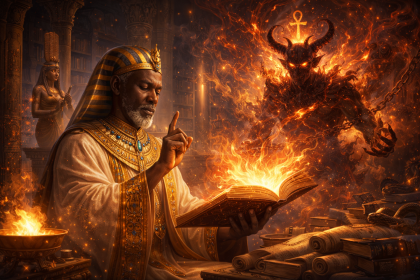
Ancient Egyptian narratives are often dismissed as myths—a term modern thought frequently equates with fiction or falsehood. In Kemetic civilization, however, myth was not opposed to truth. It was a mode of truth, designed to transmit meaning where literal language fell short.
To read Kemetic myth as naive storytelling is to miss its purpose entirely.
Sacred narrative was a philosophical tool.
1. What “Myth” Meant in Kemet
In modern usage, myth implies fabrication. In Kemet, sacred narratives functioned differently.
They were:
- Carriers of ethical instruction
- Explanations of cosmic order
- Memory systems for metaphysical ideas
- Educational frameworks for all levels of society
A myth was not meant to be believed literally nor rejected rationally. It was meant to be understood symbolically.
2. Myth and History Are Not Enemies
Kemetic thought did not separate history and myth into opposing categories.
History recorded:
- Events
- Rulers
- Chronologies
Myth conveyed:
- Meaning
- Purpose
- Moral orientation
A civilization without myth remembers facts but forgets significance. A civilization without history dreams without grounding. Kemet maintained both, allowing memory to remain structured and meaningful.
3. Sacred Narrative as Teaching Method
Myth was a pedagogical strategy.
Through stories of gods, ancestors, and cosmic struggles, Kemetic narratives taught:
- The dangers of disorder
- The necessity of balance
- The consequences of ethical failure
- The process of renewal
Stories reached those who could not read philosophical texts, while still offering depth to those capable of interpretation.
Meaning scaled with maturity.
4. The Osirian Cycle as Philosophy
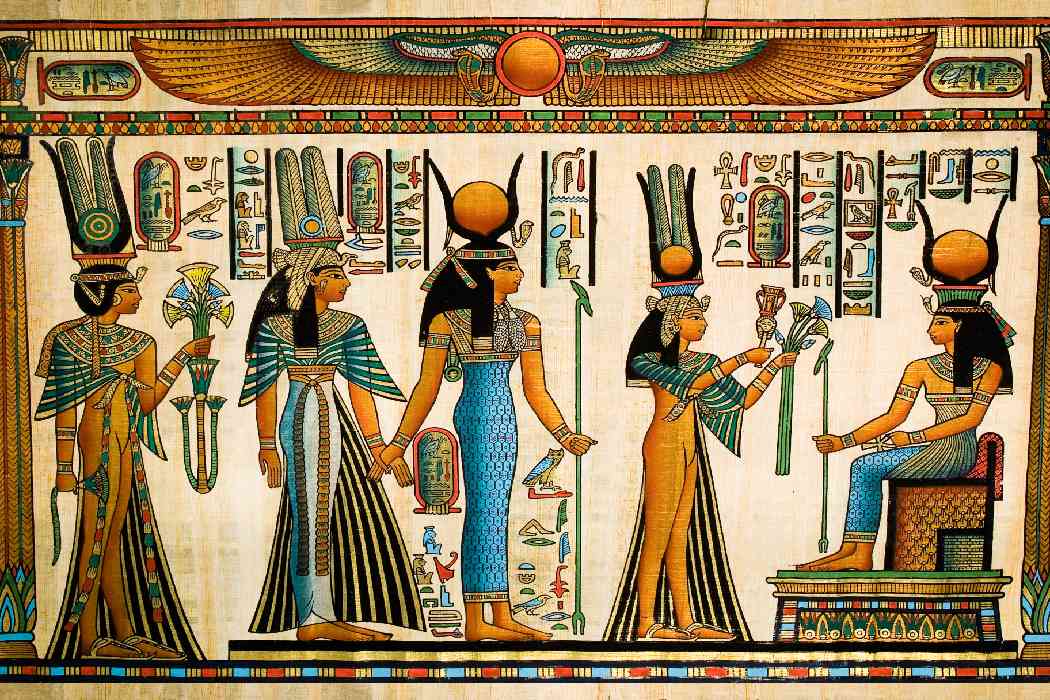
The story of Osiris, Isis, and Horus is not a fairy tale. It is a philosophical model.
It expresses:
- Death as transformation, not annihilation
- Justice as restoration, not revenge
- Kingship as moral inheritance
- Continuity through regeneration
This narrative explains how order collapses, how it is restored, and how legitimacy is transmitted across time.
It is political philosophy expressed symbolically.
5. Creation Myths and Cosmic Order
Kemetic creation narratives do not describe a single beginning. They describe order emerging from potential.
These narratives emphasize:
- Emergence rather than creation ex nihilo
- Balance arising from differentiation
- Structure imposed through principle, not force
The universe is not chaotic matter subdued by a tyrant god. It is potential guided into harmony.
6. Why Literalism Breaks Meaning
Modern literalism—whether skeptical or dogmatic—damages sacred narratives by forcing them into categories they were never meant to occupy.
Taken literally, myth becomes absurd.
Dismissed entirely, it becomes meaningless.
Kemetic wisdom avoided both errors by recognizing myth as symbolic truth—neither false nor factual, but instructive.
7. Sacred Narrative and African Continuity
Across Africa, sacred stories serve similar purposes:
- Teaching ethics through narrative
- Preserving memory without archives
- Encoding philosophy into oral form
This confirms that Kemetic myth belongs to a broader African intellectual tradition where storytelling is a serious cognitive practice, not entertainment.
Conclusion
Myth in Kemet was not the opposite of reason.
It was reason expressed through symbol.
Sacred narratives preserved truths that could not survive literal language alone. They carried ethics, memory, and cosmology across generations without distortion.
To understand Kemet, one must learn not only to read texts—but to read meaning.
Hotep.