
Introduction
Ancient Egyptian knowledge is often described as secret, hidden, or forbidden. This perception has fueled myths, fantasies, and modern esoteric exaggerations. In reality, Kemetic knowledge was not secret in the sense of being concealed, but structured in layers of access.
The question is therefore not “Was knowledge hidden?”
It is “How was knowledge transmitted, and to whom?”
1. Knowledge in Kemet Was Structured, Not Hidden
Kemetic civilization did not treat knowledge as a commodity to be freely consumed nor as a mystery to be hoarded. Knowledge was understood as power that required preparation.
There were clear distinctions between:
- Public knowledge (accessible to all)
- Specialized knowledge (reserved for trained professionals)
- Initiatory knowledge (transmitted through discipline and responsibility)
This structure ensured stability, continuity, and ethical use of knowledge.
2. The House of Life (Per Ankh)
One of the central institutions of knowledge in Kemet was the House of Life.
It functioned as:
- A center of education
- A library and archive
- A place of medical, astronomical, and spiritual study
- A training ground for scribes and priests
Knowledge was preserved, copied, debated, and transmitted here—not hidden away. Access depended on competence, discipline, and moral character, not on birth alone.
3. Initiation: Preparation, Not Secrecy
Initiation in Kemet did not mean sudden revelation or mystical privilege. It meant gradual preparation.
Initiation involved:
- Long-term study
- Ethical formation
- Mastery of language and symbols
- Psychological discipline
Sacred knowledge was not given to those unprepared to carry it responsibly. This was not elitism—it was protection.
Unprepared minds could distort knowledge and disrupt Ma’at.
4. Symbolism as a Teaching Method
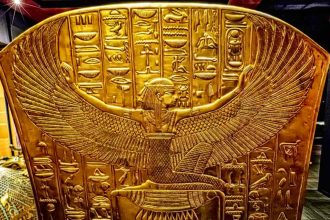
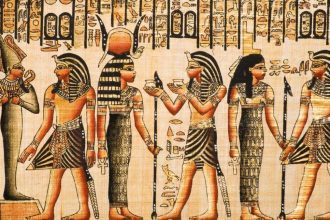
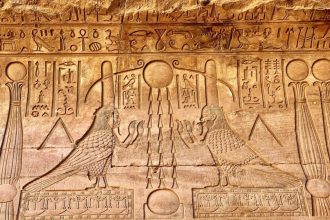
Much of Kemetic knowledge was transmitted through symbols, images, and allegory.
This was not done to confuse, but to:
- Teach multiple levels of meaning simultaneously
- Encourage reflection rather than passive reception
- Train perception and interpretation
Symbols required maturity to be understood. A symbol reveals only what the reader is ready to perceive.
In this way, the student initiated themselves through understanding.
5. Why Not Everyone Had Access
Kemetic society recognized that:
- Not all knowledge is appropriate for all stages of development
- Power without ethics leads to imbalance
- Wisdom without discipline leads to chaos
Therefore, access was regulated to maintain social harmony and cosmic order.
This approach contrasts sharply with modern cultures of instant access, where information circulates without context, responsibility, or depth.
6. Knowledge and Responsibility
In Kemet, knowledge was inseparable from responsibility.
To know was to be accountable:
- To Ma’at
- To society
- To future generations
This is why scribes, priests, and scholars were expected to live exemplary lives. Knowledge without ethical grounding was considered dangerous.
Initiation was therefore not a reward—it was a burden willingly accepted.
7. The Modern Misunderstanding
Modern interpretations often project secrecy where there was discipline, and conspiracy where there was structure.
Kemetic knowledge was:
- Preserved, not hidden
- Structured, not forbidden
- Transmitted, not mystified
What appears “secret” today is often simply lost through historical rupture, not intentional concealment.
Conclusion
Ancient Egyptian knowledge was not secret—it was earned.
It was transmitted carefully, progressively, and responsibly, within institutions designed to protect balance rather than provoke curiosity.
Understanding this restores dignity to Kemetic wisdom and reminds us of a fundamental African principle:
Knowledge is not taken.
It is received when one is ready.
Hotep.