
Introduction
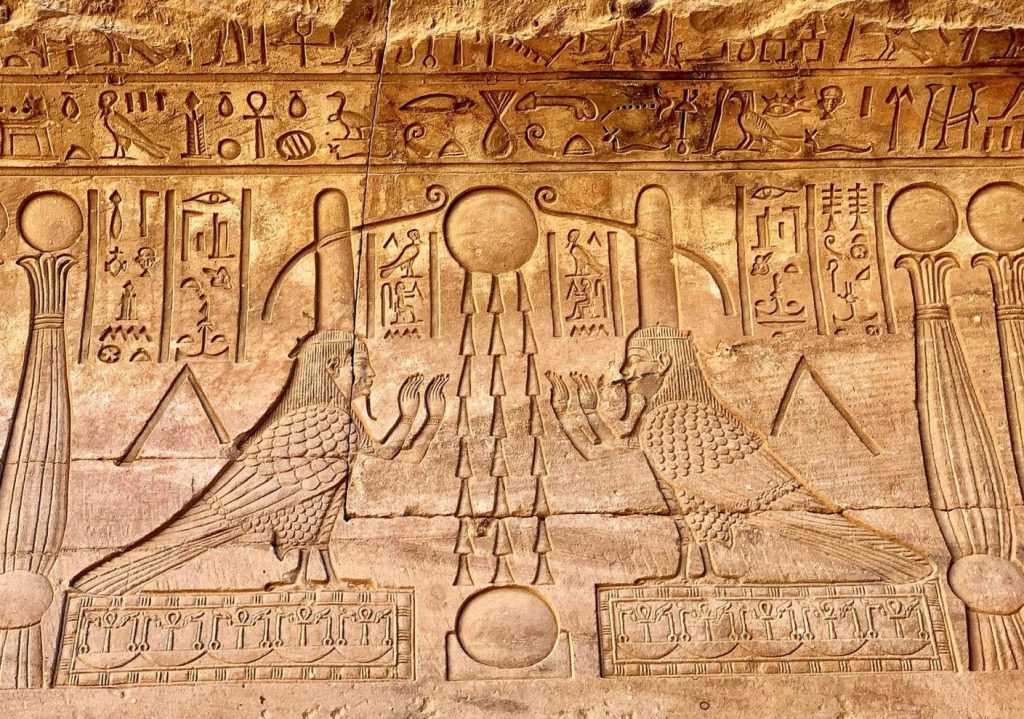
Ancient African civilizations—particularly Kemet—did not rely on abstraction alone to think, teach, or transmit knowledge. They thought in images. Symbols were not decorations, metaphors, or superstitions; they were precise instruments of thought, designed to carry complex ideas across generations.
To misunderstand African symbols is to misunderstand African intelligence.
1. Symbols as a Language of Knowledge
In Kemetic thought, a symbol was a compressed idea—capable of expressing multiple layers of meaning simultaneously.
Unlike linear writing, symbolic language:
- Communicated intellectual, spiritual, and ethical concepts at once
- Required interpretation, not memorization
- Engaged perception, intuition, and reason together
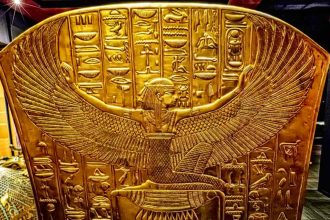
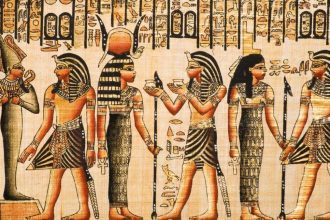
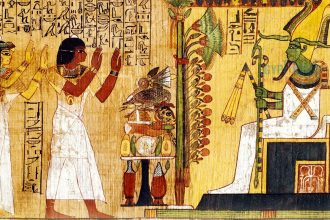
Hieroglyphs were not pictures added to text; they were the text. Each sign carried sound, image, and concept in a single form.
2. Why Images Were Essential
African philosophy understands reality as layered. Truth is not always accessible through direct explanation. Images allow:
- Indirect teaching without distortion
- Protection of depth from simplification
- Transmission across oral and visual cultures
A symbol does not force meaning; it invites understanding. The viewer participates in the act of knowing.
This method trains the mind to perceive relationships rather than isolated facts.
3. The Ankh: Life as Continuity
The Ankh is often translated simply as “life,” but this is incomplete.
The Ankh expresses:
- Life as continuity, not moment
- Union of complementary forces
- Balance between visible and invisible existence
It is not a charm. It is a philosophical statement about how life persists through harmony and connection.
4. The Djed: Stability and Endurance
The Djed pillar represents stability, permanence, and structural integrity.
Its meaning includes:
- Inner strength
- Moral backbone
- Continuity through change
A civilization grounded in Ma’at required stability at every level—cosmic, political, and personal. The Djed symbolized the spine of order holding the world upright.
5. The Was: Authority and Direction
The Was scepter symbolized power, but not domination.
It represented:
- Legitimate authority
- Direction guided by wisdom
- Power restrained by responsibility
Authority was not an end in itself. It existed to maintain balance, not to satisfy ambition.
6. Symbolism as Education
Symbols were central to African pedagogy.
They taught:
- Without dogma
- Without coercion
- Without oversimplification
A student grew into understanding. The same symbol revealed different meanings at different stages of maturity. Education was therefore progressive and lifelong.
7. Symbolism Across Africa
The Kemetic use of symbols reflects a broader African intellectual pattern:
- Meaning carried through form
- Knowledge embedded in art, ritual, and design
- Geometry as sacred order
From textile patterns to architectural layouts, African cultures encode philosophy into visible structure. This confirms that symbolic thinking is not mystical excess—it is a disciplined cognitive system.
8. The Modern Misreading
Modern frameworks often label symbolic cultures as primitive or irrational. This is a category error.
Symbols are not opposed to reason; they extend it. They allow:
- Multidimensional thinking
- Ethical depth
- Cultural continuity
What modernity calls superstition is often a language it no longer knows how to read.
Conclusion
Ancient Africans did not hide knowledge in symbols.
They preserved it there.
Symbols were the architecture of African thought—precise, layered, and enduring. To read them correctly is not to believe blindly, but to think patiently and deeply.
Understanding African symbols restores access to a way of knowing that values meaning over speed, wisdom over noise, and depth over display.
Hotep.