
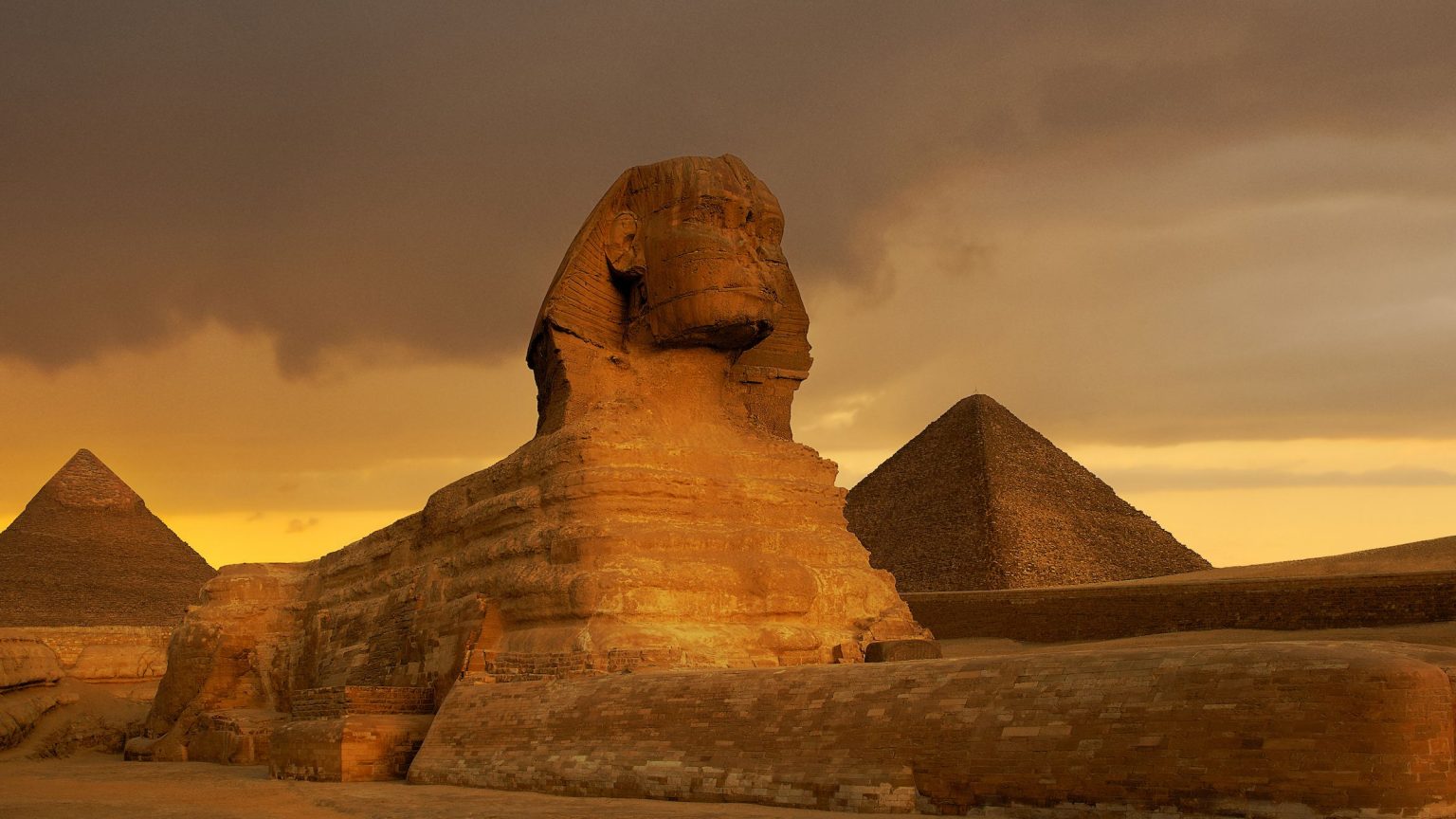
Introduction
The word Kemet is not a poetic invention, a modern reinterpretation, or a political slogan. It is the self-designation used by the ancient people of the Nile Valley to describe their land. Understanding what Kemet means—and why it matters—is the first step toward restoring clarity to African history and thought.
Kemet is not simply “Ancient Egypt.”
It is Africa speaking from its deepest antiquity.
1. The Meaning of Kemet
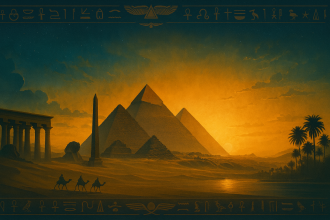
In the ancient Kemetic language (commonly called Middle Egyptian), Kemet means “the Black Land.” This expression referred primarily to the fertile, dark soil deposited each year by the Nile’s floodwaters, in contrast to the surrounding desert known as Deshret (“the Red Land”).
But Kemet was more than a geographic description. In African civilizations, land, people, spirituality, and order were never separate concepts. Naming the land was also naming a way of life, a worldview, and a relationship to the cosmos.
Kemet was:
- A land sustained by rhythm and renewal
- A society ordered by balance rather than chaos
- A civilization rooted in harmony between humans, nature, and the divine
2. Kemet Is African—Geographically and Historically
There is no ambiguity about Kemet’s location.
It lies entirely on the African continent, along the Nile Valley and Delta.
For thousands of years, the Nile connected:
- Upper Egypt
- Nubia (modern Sudan)
- The deeper regions of inner Africa
This was not a frontier but a cultural artery. Trade, marriage, language, religious concepts, symbols, and political ideas moved freely along the river. Kemet did not emerge in isolation; it developed within a continuous African world.
To separate Kemet from Africa is not scholarship—it is a historical distortion born of later ideological needs.
3. The Nile: Engine of Civilization
Kemet exists because of the Nile.
Each year, the river flooded with remarkable regularity, depositing fertile silt that allowed agriculture to flourish. This predictable cycle shaped:
- The agricultural calendar
- Religious symbolism
- Concepts of time and eternity
- Ideas of rebirth and continuity
Unlike civilizations built on conquest or constant warfare for survival, Kemet grew from stability, observation, and patience. This environment allowed the development of:
- Writing systems
- Advanced mathematics
- Architecture and engineering
- Medicine and anatomy
- Philosophy and ethics
Civilization did not “appear” suddenly in Kemet. It unfolded organically, guided by the rhythms of nature—an African hallmark.
4. Kemet and the Idea of Civilization
Western narratives often describe civilization as a linear progression starting elsewhere and eventually reaching Africa. Kemet disrupts this narrative entirely.
In Kemet we find, very early:
- Organized state structures
- Codified ethics
- Formal education systems
- Sacred architecture aligned with cosmic principles
- Written reflection on life, death, and morality
This was not primitive experimentation.
It was mature civilization, grounded in philosophy and cosmic order.
Kemet did not merely build monuments.
It built ideas.
5. Civilization as Balance, Not Domination
A key distinction of Kemetic civilization lies in its philosophical foundation.
The central organizing principle was Ma’at—truth, balance, order, justice, and harmony. Civilization was not defined by how much land one conquered, but by how well one maintained balance:
- Between ruler and people
- Between humans and nature
- Between the visible and invisible worlds
Law, governance, spirituality, and daily life all flowed from this principle. Civilization, in the Kemetic sense, was ethical before it was material.
This understanding resonates deeply with other African philosophies across the continent, reinforcing the idea of a shared intellectual heritage.
6. Kemet as Foundation, Not Exception
Kemet is often treated as an anomaly—“advanced Egypt” surrounded by a supposedly undeveloped Africa. This framing is historically false and intellectually lazy.
Kemet should be understood as:
- A foundation, not an exception
- A source, not a mystery
- A continuum within African civilization
Later African empires—Ghana, Mali, Songhai, Kush, Ethiopia—did not emerge from nothing. They developed within a long tradition of African statecraft, philosophy, and spiritual systems that Kemet helps us understand.
7. Why Kemet Matters Today
Kemet is not important because it was “great,” but because it shows what African civilization values when allowed to develop on its own terms:
- Knowledge grounded in observation
- Power restrained by ethics
- Spirituality integrated into daily life
- Continuity between ancestors, living, and unborn
For HOTEP.AFRICA, Kemet is not nostalgia.
It is orientation.
Understanding Kemet allows us to:
- Reframe African history with dignity
- Approach African philosophy seriously
- Engage esoteric knowledge responsibly
- Restore intellectual continuity without romanticism
Conclusion
Kemet is Africa remembering itself.
It is the Black Land where civilization rose not through domination, but through balance; not through chaos, but through order; not through spectacle, but through meaning.
To study Kemet is not to look backward—it is to relearn how civilization can be aligned with truth.
Hotep.